Key takeaways
- You can now legally undercut the OTAs on your own website. Their scanners find the gap within days and discount back with their own money, so level is still the place to be.
- The check takes ten minutes: a dozen dates, phone and laptop, logged in and out, like for like on both sides.
- Gaps come from three places: discounts the OTA applies (Genius, mobile rates, member prices), setup differences (breakfast, minimum stays, markups), and things nobody did on purpose (wholesalers, stale rates).
- Booking.com's self-funded discount, the Booking Sponsored Benefit, is fully automatic, and nobody at Booking.com can pause it for you. It stops when the scan stops finding a cheaper public price on your own website.
- The old fenced-product trick, a room-only rate sold only on your own site, is exactly what triggers it. Be better at the same price instead: free breakfast for direct bookers, perks, or a genuinely private rate.
- There is one switch that stops Booking.com's version outright, in your own extranet, and it is not a pricing setting. It costs you the payment guarantee and a job at reception, so read that section before you touch it.
Want us to look at your rate parity?
What rate parity actually means
Rate parity means a guest sees the same price for your room on your own website as they do on Booking.com and Expedia.
Being cheaper direct sounds ideal. It doesn't last. OTAs scrape the web daily. When they find a lower price they discount their own until they're level or cheaper. Being dearer direct is worse: your guests shop around, find the better rate on Booking.com, and you pay 15% commission on someone who started the evening on your own website.
Either way, aim for level.
Is being cheaper direct still against the rules?
For years your OTA contract contained a promise: you won't sell your own rooms cheaper than Booking.com does. That's rate parity as a legal obligation, and it's why plenty of hoteliers still treat undercutting the OTAs like speeding past a police station.
Three things have happened since.
2015. Strict parity went. Regulators leaned on Booking.com and the clause shrank to "narrow parity": undercut other OTAs if you like, just not on your own public website.
December 2024. The EU banned the rest. Booking.com is now a designated "gatekeeper" under European law, and parity clauses came out of every European contract on 2 December 2024. They also can't punish a hotel sideways for being cheaper direct: no commission hikes, no burying you in search results.
The UK. The EU law stops at Calais, so a UK contract technically still carries narrow parity. In practice nobody is enforcing it. Booking.com has stopped defending it, and the UK's new competition law (January 2025) gives our regulator similar powers. Nothing has reached travel yet.
So being cheaper on your own website won't get you delisted. The reason to chase parity isn't legal any more. It's that the OTAs never needed the contract to undercut you.
How the OTAs discount without asking you
Both big OTAs run programmes that change the price the guest sees without any rate change from you. Some are funded out of your margin, like Genius. Some are funded out of theirs: the OTA gives up a slice of its own commission to show a lower price than the rate you sent it. The industry word for that is shaving. Booking.com's version now has an official name, the Booking Sponsored Benefit, and we've just spent a week inside it. It was educational.
Here's how it works. Their checker scans your own website. When your cheapest public price sits below theirs, they discount out of their own commission until the gap closes. You never see a request. You're still paid in full at the rate you set, and commission is still charged on the original price. Per booking it costs you nothing. What it costs you is the reason anyone had to book direct. On our hotel it was a blanket 9% on every room and every rate. The badge said "9% off" and named nothing. It left Booking.com selling the room with breakfast for five pounds fifty less than the hotel's own website sold it without.
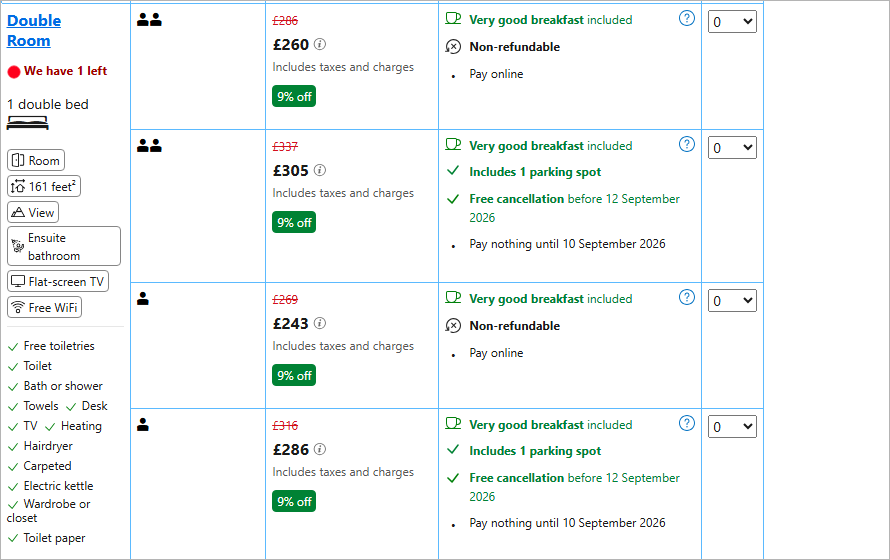
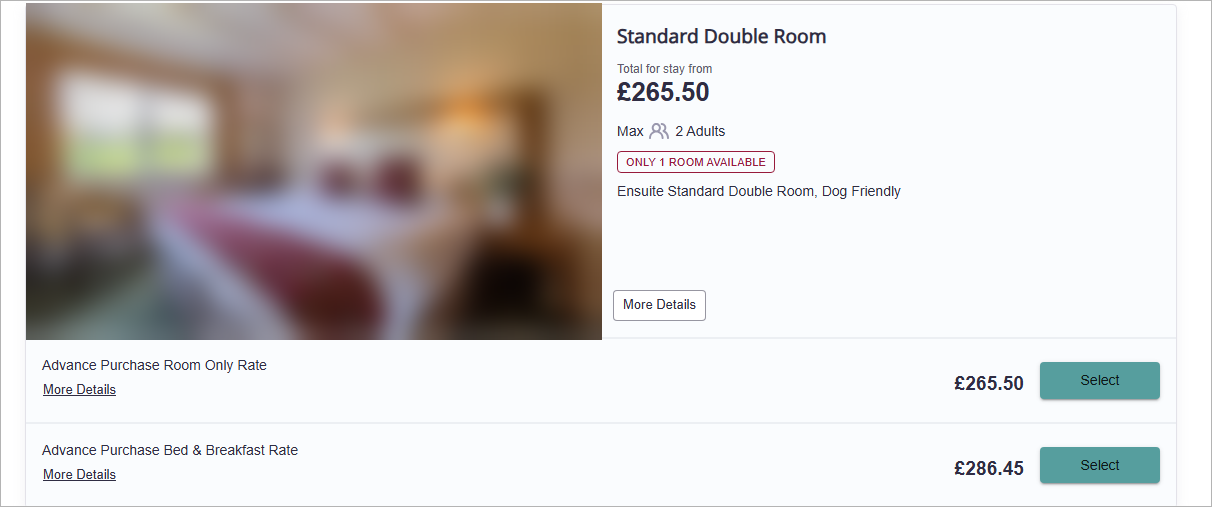
A few things nobody tells you until you're inside it. The scan is product-blind: it read a room-only rate on the hotel's website against Booking.com's breakfast-included rate and called that a disparity, and we quoted their own like-for-like parity definition back at them, with penny-exact screenshots attached. It moved nothing. There is no off switch. Support told us twice that no team can pause it, that it deactivates only when the scan stops finding a cheaper price, and that it re-arms the moment one reappears. And there is exactly one structural exception, buried in their own help pages, and it is below.
You can see all this land in the takings. At one hotel we price, six of 35 OTA bookings in a single month came in at exactly 90% of the listed rate. That's Genius, in the bank statement.
It also decides whether your marketing pays. If your Google Ads click lands on a page that's dearer than the same room on Booking.com, you've paid for the click and then paid commission on the booking too. You bought them the sale twice.
The ten-minute check
- Pick a dozen dates spread over the next six months. Mix weekends, midweek, a bank holiday.
- For each date, price two or three room types at different guest numbers on Booking.com, Expedia and your own website.
- Do some of the checks on your phone and some logged in, because mobile rates and member prices only show up there.
- Compare like for like: same room, same breakfast, same cancellation policy, and the cheapest bookable rate on both sides. Don't compare your flexible rate with their non-refundable one. That's the classic false alarm.
- Count the dates that come back different, note which direction, and note what the badge next to any cheap price actually says. Genius, Mobile rate and member price all name themselves. A bare "9% off" that names no programme at all is the OTA spending its own money.
If everything matches, you're done. Put it in the diary for next month.
Found a gap? The next question is what it costs you.
Our revenue check is six questions about how you price and sell your rooms, and it puts a plain-English number on what's worth fixing. Free, about ninety seconds, and you see the result without signing up.
Where the gaps come from
When prices don't match, the cause is usually in one of three buckets.
Discounts the OTA applies. Genius takes 10 to 20% off, funded by you. Mobile rates take at least 10%, country rates at least 5%, campaign deals whatever you agreed to in a quiet January three years ago. These stack, so a mobile rate plus Genius can be 20% or more off without anyone ever deciding that. Expedia's member prices run 10 to 20% for One Key members. And on top of all of it sits the sponsored discount, funded by them.
Setup differences. A different rate card pushed to the OTAs. A percentage markup somebody added years ago. Breakfast that flows through direct but not through the channel manager. A minimum stay set on one side only. A non-refundable discount that exists direct and is missing on the OTA. Rooms mapped to the wrong room types.
Things nobody did on purpose. Wholesalers reselling your rooms on your own Booking.com listing (they show up labelled "Partner Offer"). Prices cached and stale on a channel you forgot about. A rate keyed by hand at the front desk. Your own tools, too: one of our routine imports once reverted 946 room-nights of prices. It took days to surface.
The fix, step by step
Step 1. Send the same rate card everywhere. One card, both sides. If there's a percentage uplift on what you push to the OTAs, make sure it's something you chose. We've seen plenty of markups nobody could explain. Most were accidents.
Step 2. Check the plumbing. An hour in your channel manager covers all four:
- breakfast and extras flow through to the OTA the same way
- minimum stays match on both sides
- the non-refundable discount exists on both sides, at the same percentage
- rooms are mapped to the right room types
Step 3. Turn off Partner Offers. If you see "Partner Offer" rates on your own Booking.com listing, wholesalers are reselling your rooms underneath you. Opt out in the extranet.
Step 4. Decide about Genius and member discounts. We'd turn them off. If you'd rather keep them, put them on one room type only and raise that room's rate to offset the discount, so the discounted price lands level with your website. Expect a visibility dip either way. Give it a few weeks before you judge it.
Step 5. If you're worried about visibility, pay with commission, not rate. Both platforms sell placement directly: Expedia's Accelerator, and Booking.com's Preferred Partner programme (about 3% extra commission) and Visibility Booster. Extra commission only costs you on the bookings it brings in. A lower rate costs you on every booking, including the ones you were getting anyway.
Step 6. If you're caught in an OTA price war, know which levers exist. Expedia sees Booking.com showing a discounted price, beats it out of its own margin, Booking.com responds, and the two of them race each other down while your direct rate is stranded above both. Your Expedia account manager can pause all Expedia-side discounts for 30 days. Ask. We've found them willing. Booking.com's Sponsored Benefit has no pause you can ask for, whatever anyone on the phone suggests. It stops when the scan finds no cheaper public price on your website. Or when you leave their payment rail, which is the next section. Use Expedia's window to fix the cause.
The one switch that does turn it off
Booking.com's own partner page on the benefit ends with a sentence worth reading twice: "Payments by Booking.com is also technically required for the application of BSB." So the sponsored discount is not really a pricing feature. It rides on their payment rail. Leave the rail and it cannot reach you.
Deactivating takes about a minute. Extranet, Finance, Finance settings, Payments by Booking.com status, deactivate. No account manager. No case number.
Before you do it, price what you're giving up, because it is more than the commission paperwork. Today Booking.com hands you a virtual card that guarantees the booking, chargeable for months afterwards, and your PMS can sweep those cards automatically a few days before arrival. Leave, and every one of those becomes yours:
- You get the guest's own card, unvalidated. Some will decline. Some are deliberately empty, because a card that can't be charged can't be charged a cancellation fee either.
- Somebody charges them by hand. On a busy Friday at the hotel that prompted this article, that is around forty arrivals.
- Chargebacks become yours, because now you're the merchant.
- Foreign cards get refused more often by your own processor.
- Your commission arrives as a monthly invoice you pay, instead of being netted off what they send you.
- Guests lose the option to spread the cost over instalments, which Booking.com sells hard.
That is a permanent job at reception in exchange for a discount that costs you nothing per booking. For most hotels the last section is a better answer, because it removes the reason the discount fires instead of unplugging the mechanism that delivers it. But the switch is real. Nobody at Booking.com will mention it.
One thing it does not fix: Expedia funds its own member discounts and has no equivalent switch. Only closing the gap covers both.
Check the fix stuck
Re-run the ten-minute check two or three days after each change. Reverts show up on day two. Then make it a monthly habit.
And keep half an eye on the bookings themselves. If guests keep paying exactly 90% of your listed rate, a discount is still switched on somewhere, whatever the settings page says.
Win the direct booking without cutting your price
The workaround everyone recommends, and the one we recommended ourselves until this year, is the fenced product: sell a room-only rate on your own website while the OTAs carry bed and breakfast, cheaper headline for you, like for like still parity. We ran exactly that at a hotel we price. It lasted days. The scanner read the room-only price against their breakfast-included price and the sponsored discount switched on. We sent a careful, clause-quoting complaint. It achieved nothing, because there is nobody on the other end with a switch.
So our doctrine has changed. Make your cheapest public price identical everywhere. To the penny. Then put the reason to book direct somewhere a price scanner can't read:
- Same price, better contents. Push room-only to every channel at the same price, and include breakfast free when the guest books direct. The scanners compare room-only against room-only and find nothing. The guest compares your room-only, breakfast included, against the OTA's B&B rate and books direct. Booking.com can match a number with commission money. It can't cook a breakfast.
- Perks at parity. A welcome drink, late checkout, an upgrade when the house is quiet. Cheaper than breakfast, no rate-plan surgery. The front desk delivers them, every stay.
- A discount at the last step. Sell the same bed-and-breakfast rate everywhere, and let the guest take the breakfast off in your own checkout. The scanner reads your availability page, not your basket, so it sees parity. Guests who never click still pay full price, which makes this the cheapest version of the idea. Worth asking your booking engine whether it can do it; ours could, which we did not expect.
- A genuinely private rate. A better price for your email list or returning guests, behind a code. Private rates for a defined group have always been allowed. Genuinely matters: print the code on your homepage and it's a public rate again, and the scan will find it.
The honest arithmetic on the breakfast version: at menu price it roughly cancels, about £21 of breakfast for two against about £21 of commission on a £140 room. Call it a wash. At what breakfast actually costs to serve, you're clearly ahead. Toast is cheap.
One caveat on all of them. Members who are signed in still see the OTA's own loyalty discount, so a Genius member will find Booking.com a few percent cheaper than your site whatever you do. A free breakfast beats ten percent on any room under about two hundred pounds, which is most rooms in most hotels. Just know which comparison you're making.
Start with the ten-minute check. Most hotels find something.
Frequently asked
Is it legal to be cheaper on my own website than Booking.com?
Yes. Booking.com's parity clauses came out of every European contract on 2 December 2024, and although a UK contract technically still carries narrow parity, nobody is enforcing it. Being cheaper direct won't get you delisted. The catch is commercial rather than legal: the OTAs will discount back with their own money until they are level with you again.
Why is Booking.com showing a lower price than the rate I set?
Usually one of three things. A discount programme you are funding, such as Genius, a mobile rate or a country rate. A setup difference, such as breakfast or a minimum stay that only exists on one side. Or the Booking Sponsored Benefit, where Booking.com gives up part of its own commission to undercut your website. You're still paid your full rate on that last one.
Can I ask Booking.com to turn off the Sponsored Benefit?
No. Support can't pause it, and told us so twice. It switches off when the scan can't find a cheaper public price on your own website, or if you deactivate Payments by Booking.com in your extranet, which the benefit depends on. That second route costs you the payment guarantee and puts card handling back on your reception desk.
Will turning off Genius hurt my visibility?
Expect a dip, and don't judge it for a few weeks. If you want the placement without the rate cut, buy it with commission instead: Booking.com's Preferred Partner programme is about 3% extra, and Expedia sells Accelerator. Extra commission only costs you on the bookings it brings in.
Want us to look at your rate parity?
Otterly Booked prices rooms for UK independent hotels. Rate parity is part of the job: we run the check across your dates, name where each gap is coming from, and fix the setup that causes it. If your own ten-minute check turned something up, book a call and we'll go through it with you.
Written by Nathan Noerr, who runs pricing at Otterly Booked. He has over 12 years running pricing at travel companies such as Premier Inn and National Express.