When we talk to independent hotel operators about dynamic pricing, they usually imagine us bumping up all their rates and making fifty changes a week. Or they assume we're going to switch them onto one of the typical software tools they already know, which adjust prices without really looking at competitors or any local nuance.
The actual shape of the work for our average client is very different. We sat down to look at what our recommendations look like across the first few weeks for the typical hotel, partly because we wanted to know ourselves, and partly because the picture is informative if you run a small independent hotel and you're considering dynamic pricing for the first time.
Here's our previous post on why most indie hotels aren't doing this work today. This is the companion piece on what it actually looks like when you do, and a quick honest look at the numbers we generate behind the scenes.
The data
For the average client, we make around 100 individual price recommendations a month after onboarding. Every recommendation is reviewed by Nathan or by me before it goes out through the PMS into Booking.com, Expedia, and the rest of the channel mix.
We pulled 5 weeks of recent recommendations from our active client work and looked at the shape. All examples below are anonymised. We don't share which client is which, or which dates they relate to.
Average move per recommendation: £1.28 a night
The first thing that surprised us when we pulled the data was just how small most of the adjustments are.
- Mean change per recommendation: £1.28 per night
- Median change for nights where we did move the rate: £5 to £10
- Biggest single hike: £40 (a peak summer Saturday)
- Biggest single cut: £35 (a soft autumn weeknight)
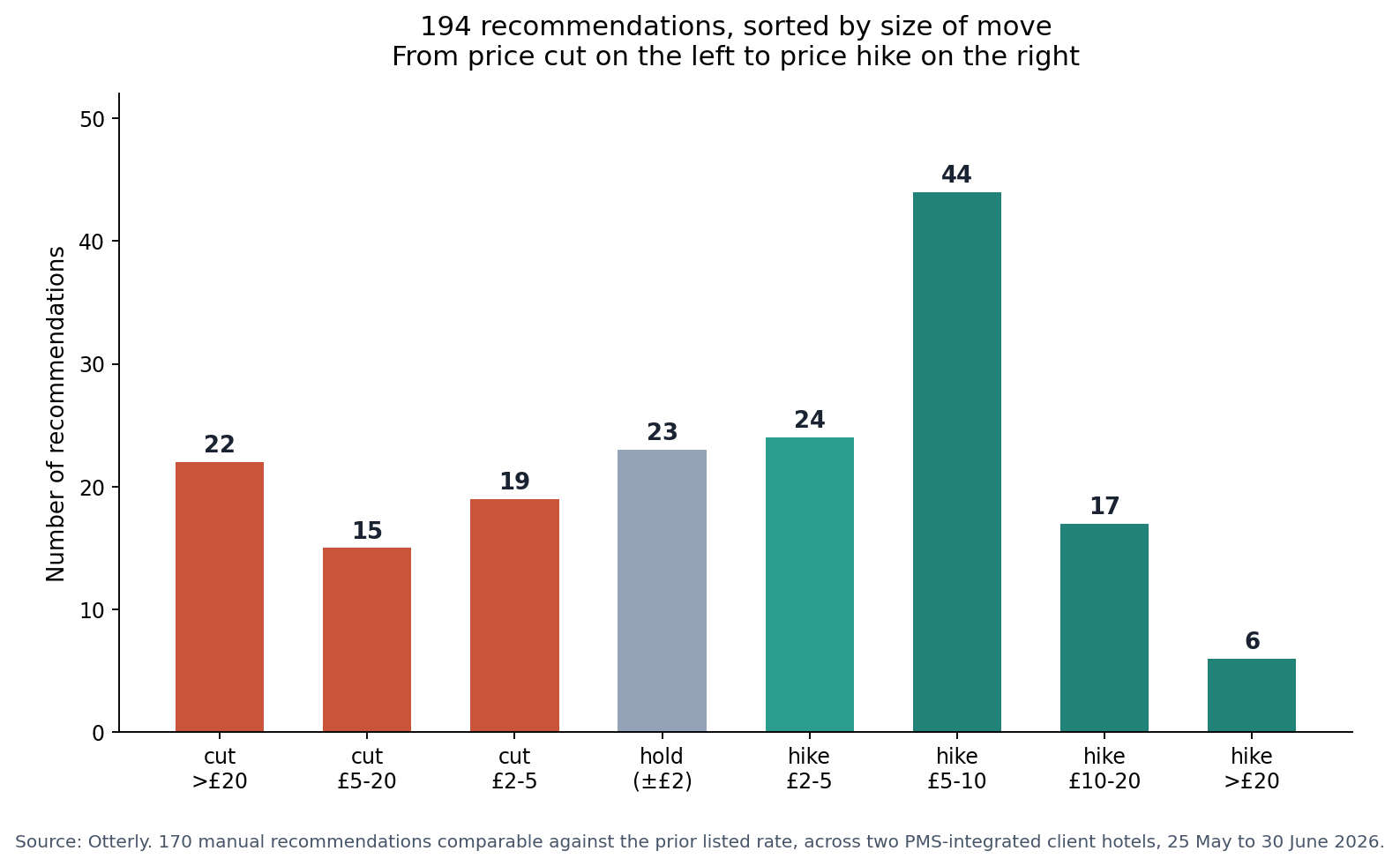
Most of the moves are gentle. Real dynamic pricing tends to look like a hundred small, deliberate nudges across a calendar, rather than the dramatic hikes operators tend to imagine.
The work is identifying the specific dates where there's a high probability of selling out at a higher price, plus the specific dates where demand is unusually soft and competing on price matters more. The metric we watch most closely is the impact of those moves. We want to change few enough rates that the recommendations matter, and we want the ones we do make to actually be impactful. A hike shouldn't reduce occupancy. A cut should increase it. Together they should lift total revenue. That discipline is what makes this look quiet from the outside.
A third of our recommendations are price cuts
Of the comparable recommendations across our work, 54% were hikes, 14% were holds, and 33% were cuts.
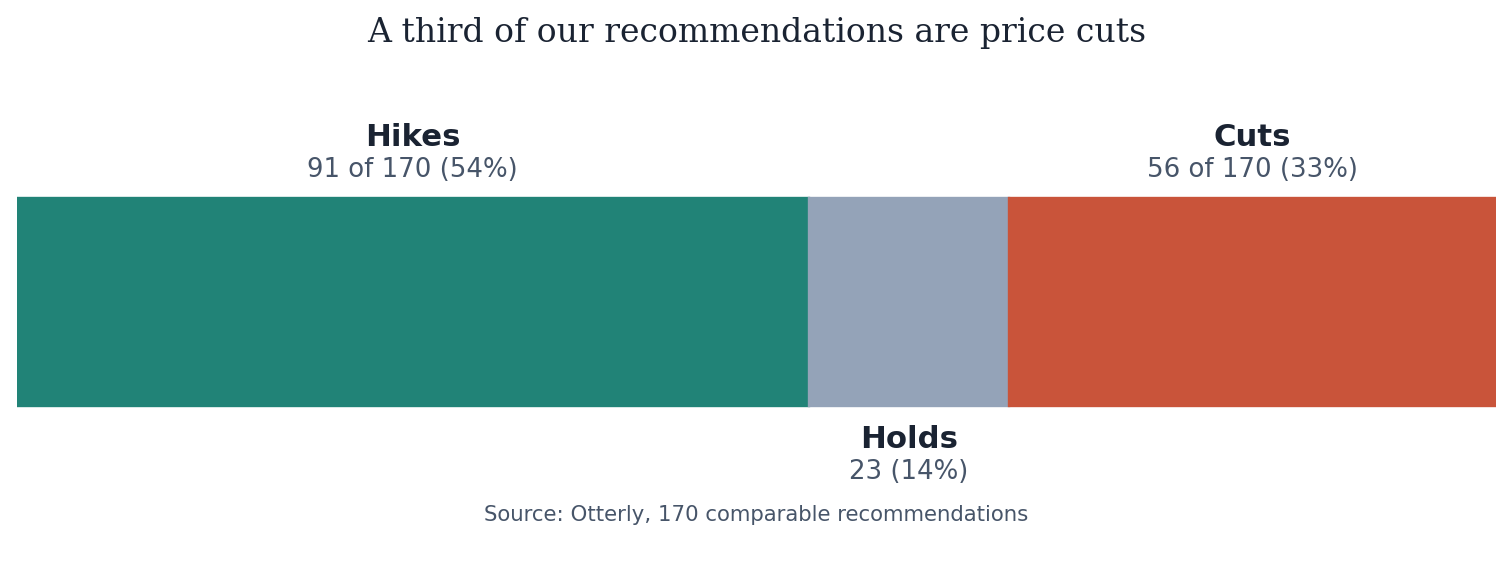
The cut share surprises some of the operators we show it to, because the mental model of dynamic pricing is "the software will push my rates up." It pushes them down on the dates where it should.
When we recommend a cut, it's usually on a specific date where a hotel is lagging behind its history and behind the local pickup pattern in the same town. A soft Tuesday in October, a weekend that didn't pick up the way the model expected, a wedding cluster that fell through. From years working at the big chains, having high conviction on the handful of days where you push prices up matters about the same as having high conviction on the dates where you cut them. Both protect total revenue. Independent operators tend to fixate on the upside half of the trade.
We'd expect the cut share to rise as we move into the quieter winter season.
The work is spread across every day of the week
Our recommendations are distributed across the calendar pretty evenly. Saturday gets attention, but so does Sunday and Monday. A lot of operators we speak to set rates as if Friday and Saturday are the only nights that matter. They miss a Tuesday in July as a revenue opportunity. They don't think about what their rate signals on a Sunday or a Monday.
With new clients, the first round of changes does cluster on weekends, particularly when a hotel has only a few rooms left and the surrounding area is already busy. Those are the highest-conviction calls in the early weeks. After that the work spreads out.
1 to 12 weeks ahead is where the real work sits
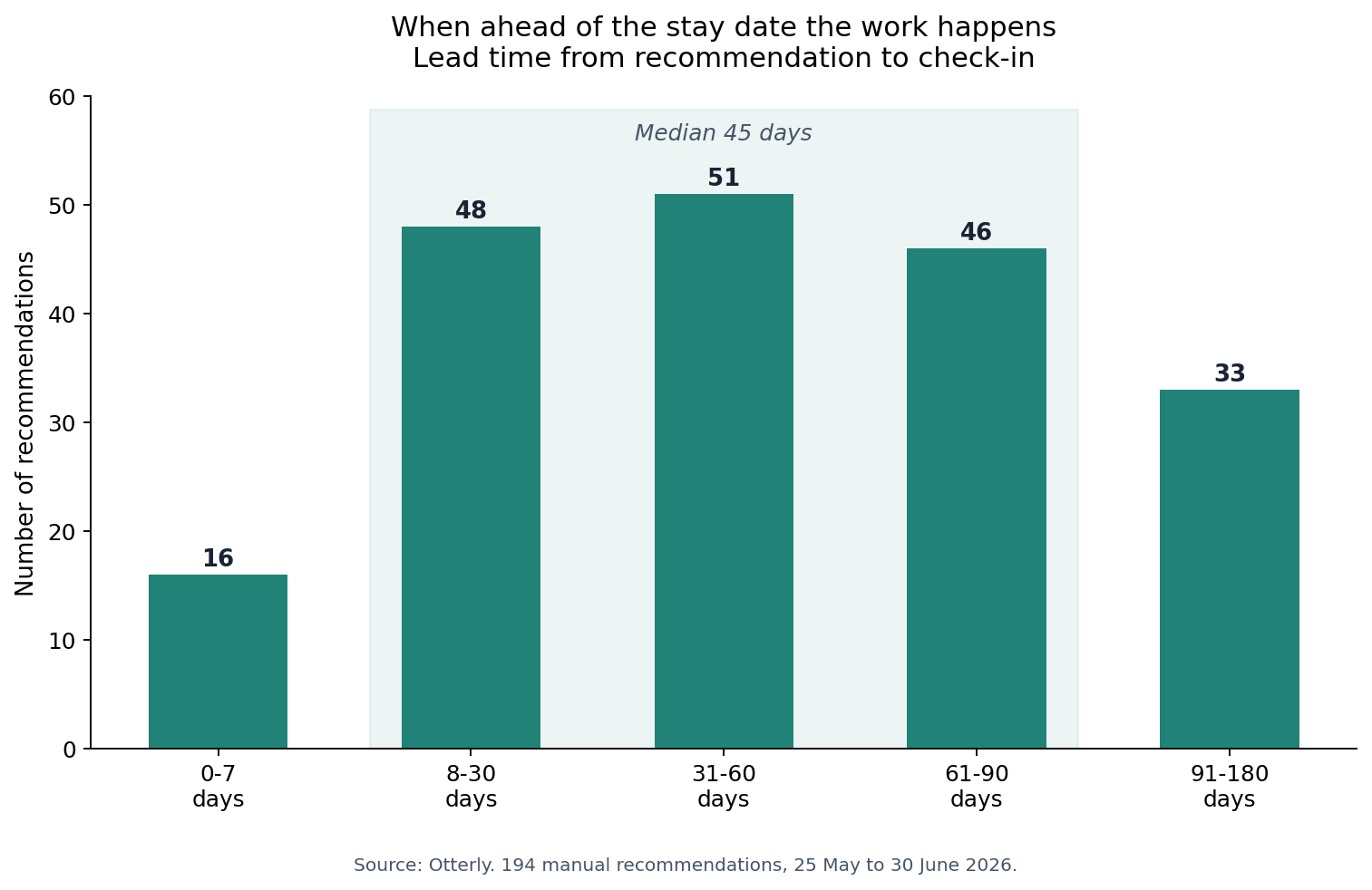
Median lead time on our recommendations is 45 days. The spread runs from same-day changes through to about 120 days out. Most of the volume sits in the 1 to 12 week window before stay.
We're rarely chasing last-minute changes, and we don't set an entire summer rate-card in March and walk away from it. The point is that by the time someone is browsing for a room three weeks from now, the rate should already be in the right place.
That window is what indies who price the whole season in spring and never revisit are missing.
How we actually work
Our pricing engine looks at your PMS data, your competitor availability and prices, the broader area, what's happening nationally, the time of year, and the demand patterns we can see. It produces a recommended rate plus a confidence band for every future date.
Every single recommendation is then reviewed by Nathan or by me before it goes anywhere near your PMS or your live listings. We override when the model wants to push too aggressively. We adjust when we know something the model doesn't yet: a local festival, a wedding cluster, a building project across the road. The model gets us most of the way and the human review is the last 20%.
When a recommendation goes out, it flows through the PMS straight into Booking.com, Expedia, and the rest of your channel mix. You don't have to log in and click anything.
Why people, not software
The reason every recommendation gets reviewed by a person is the same reason most indie operators tell us they prefer working with us over the off-the-shelf tools they tried.
Local demand trends, the rhythm of your specific property, the conversation about whether your regulars will tolerate a £20 jump for August bank holiday, none of that fits inside a rules engine. We're on the end of a phone for our clients whenever they want to talk through a date or push back on a recommendation. Most operators don't want another faceless piece of software to log in and manage. They want real people with real experience doing the pricing work for their hotel and making them more money.
If you run an independent UK hotel and you'd like a sense of what your own first month of recommendations might look like, drop us a line. We'll pull the numbers for your specific town and walk you through them.
Frequently asked
What is dynamic pricing for hotels?
Dynamic pricing means adjusting your hotel rates based on demand, competitor pricing, and local market signals, rather than holding the same rate across a season. In practice that means raising prices when you can see a busy weekend coming and softening them when demand is weaker. Independent hotels usually set rates once a season and forget them. Dynamic pricing means revisiting them throughout the year.
How often do hotel prices change under dynamic pricing?
For our average client we make around 100 individual price recommendations a month, but most of those are small moves of between £5 and £10 a night. Real dynamic pricing for a small independent hotel isn't fifty hikes a week. It's a steady cadence of gentle adjustments, plus occasional bigger moves on dates where demand or competitor pressure justifies it.
Will dynamic pricing always raise my hotel's rates?
No. In our data, only about half (54%) of our recommendations are price hikes. A third (33%) are cuts, on dates where demand is unusually soft or competitor pricing has dropped. The remainder are holds. Good dynamic pricing protects revenue on the down dates as much as it captures revenue on the up dates.
How far ahead does dynamic pricing actually work?
Median lead time on our recommendations is 45 days from the stay date, with most of the volume in the 1 to 12 week window. That gives the rate enough time to be in the right place when bookings come in, without trying to predict demand a year out or scrambling on the day before.
Do I need a particular PMS to work with Otterly?
No. We can work alongside SiteMinder, Little Hotelier, Eviivo, Beds24, Cloudbeds, and most others. We don't need a deep integration to start. The recommendations are reviewed by a person before they go out, and they flow through your existing channel mix into Booking.com, Expedia, and the rest.
Want to see what your own first month of pricing recommendations might look like?